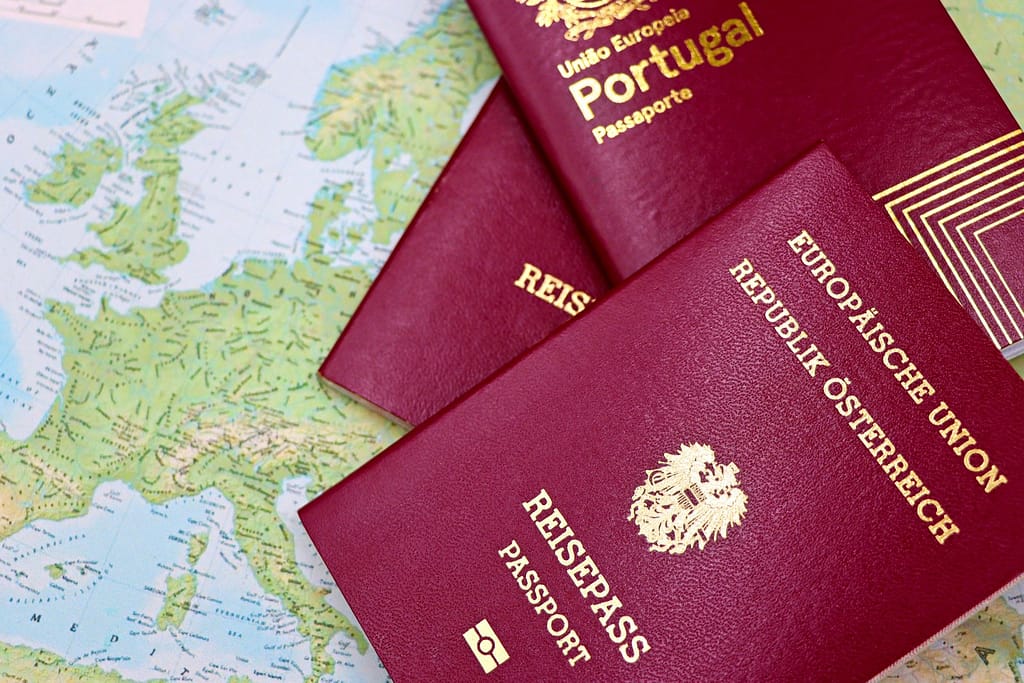
The Ultimate Gateway to Europe
Dreaming of backpacking through the romantic streets of Paris, exploring the majestic cliffs of Portugal, or eating tapas in a lively neighborhood square in Spain? If you hold an Indian passport or belong to a non-visa-exempt country, your European dream officially begins with a single document: the Schengen Visa.
A Schengen Visa is an absolute game-changer for global travelers. It is a short-stay visa that allows you to travel across 29 European countries inside the Schengen Zone without undergoing any internal border checks. However, because this visa deals with international law and cross-border security, the application layout is notoriously strict. A single missing paper or a flawed financial bank statement can lead to an immediate rejection. In this ultimate 2026 guide, we breakdown the exact step-by-step framework to successfully secure your tourist visa without paying massive agency fees.
What is the Schengen Zone? Covered Countries in 2026
The Schengen Area represents one of the greatest achievements in European unity. It operates fundamentally as a single massive jurisdiction for international travel. Once you legally pass through the external border of your first Schengen country, you can seamlessly walk, drive, or board high-speed trains across all alternative member nations without showing your passport again.
As of 2026, the Schengen Zone officially includes 29 countries:
Austria, Belgium, Bulgaria, Croatia, Czech Republic, Denmark, Estonia, Finland, France, Germany, Greece, Hungary, Iceland, Italy, Latvia, Liechtenstein, Lithuania, Luxembourg, Malta, Netherlands, Norway, Poland, Portugal, Romania, Slovakia, Slovenia, Spain, Sweden, and Switzerland.
Important Travel Note: Please do not confuse the Schengen Zone with the European Union (EU). Countries like Switzerland, Norway, and Iceland are not part of the EU, but they are full members of the Schengen Zone, meaning this single visa covers them completely. Conversely, Ireland is an EU member but maintains its own separate visa protocol.
Schengen Visa Types Explained
Depending on the core purpose of your journey, you must choose the correct structural visa layout category on your official form:
Uniform Schengen Visa (Category C): This is the classic, standard Short-Stay Tourist Visa that 99% of travelers need. It allows you to stay or travel inside the Schengen territory for a maximum of 90 days within any 180-day period.
Single-Entry Visa: This allows you to enter the Schengen Zone exactly once. The moment you pass external border control to exit Europe (for example, flying back home or moving to a non-Schengen nation like the UK), the visa expires immediately, even if you still have remaining days left on your timeline.
Multiple-Entry Visa: The holy grail for frequent globetrotters. This allows you to enter and exit the Schengen territory as many times as you like within your visa’s validity period (which can range from 3 months to 5 years), provided you strictly follow the 90/180-day rule.
The 90/180-Day Rule Master the Budget
This is the single most important rule that confuses travelers and leads to accidental overstays or border bans. The official framework states that you cannot spend more than a total of 90 days inside the Schengen Zone within any rolling 180-day period.
To calculate this accurately, you must always look backward from any day of your stay. Count the total number of days you spent inside Europe over the previous 180 days. If that number hits 90, you must legally exit the zone immediately and wait outside before you can enter again. Breaking this rule will permanently destroy your travel metrics and lead to heavy future visa rejections.
Where to Apply? The Golden Rule of Jurisdictions
One of the most common mistakes travelers make is submitting their application to the wrong European embassy, which results in an immediate rejection at the counter. You cannot simply apply to whichever country has the earliest appointment slot. You must strictly follow these three rules to determine your correct jurisdiction:
The Single-Country Rule: If your European trip takes place entirely within a single country (for example, a 10-day vacation only in Portugal), you must apply exclusively at the embassy or consulate of that specific country.
The Main Destination Rule: If you are planning a multi-country trip (for example, 3 days in France, 7 days in Spain, and 2 days in Italy), you must apply at the embassy of the country where you will spend the maximum number of days—in this layout case, Spain.
The First-Entry Rule: If you plan to spend an equal number of days in multiple countries (for example, 4 days in France and 4 days in Germany), you must apply at the embassy of the country you will enter first—which is your first port of entry into Europe.
Official Sovereign Visa Application Portals
To guarantee absolute authenticity and avoid scam platforms that charge fake processing fees, always fill out your digital applications strictly on the official sovereign portals managed directly by the European governments. Depending on your main destination, here are the official entry tracks:
France Visa Portal: france-visas.gouv.fr
Spain Visa Portal: exteriores.gob.es
Germany Visa Portal: diplo.de
Portugal Visa Portal: mne.gov.pt
Switzerland Visa Portal:admin.ch
The Comprehensive Mandatory Documents Checklist
To get your Schengen Visa approved by the immigration officers on the first try, your document block must be completely flawless. Organize your physical folder using this exact sequence before you walk into your appointment:
1. Official Visa Application Form
Fully completed, dated, and signed by you. Make sure the data you enter here perfectly matches the details on your physical passport down to the exact letter.
2. Original Valid Passport
Must be issued within the last 10 years, contain at least two completely blank pages for your visa sticker, and maintain a validity of at least 3 to 6 months beyond the date you plan to leave the Schengen Zone.
3. Schengen Standard Photographs
Two recent, high-quality passport-sized photos (not older than 6 months). They must strictly adhere to Schengen rules: a solid white background, 35x45mm sizing, a neutral facial expression, and 80% face coverage without any headgear or tint glasses.
4. Cover Letter (Your Personal Pitch)
This is arguably the most critical document in your folder. It is a formal letter written by you, addressed to the visa officer, explaining exactly why you are traveling to Europe, your detailed day-by-day itinerary layout, how you will fund your trip, and a strong statement proving your solid ties to India that will force you to return home.
5. Proof of Secured Accommodation
You must prove exactly where you will sleep every single night inside Europe. You can submit confirmed hotel bookings, hostel vouchers, or a formal invitation letter accompanied by proof of identity from a legal European resident host.
6. Confirmed Flight Itinerary (Flight Dummy Reservation)
A round-trip flight reservation mapping out your entry and exit dates from the Schengen Zone.
Expert Travel Hack: Never buy non-refundable, fully paid flight tickets before your visa is physically stamped in your passport! Use reputable booking sites to get a verified “Flight Itinerary for Visa Application” that locks in the flight routes without charging you the full ticket price up front.
7. Comprehensive Travel Medical Insurance
A mandatory policy that provides complete emergency medical and repatriation coverage across all Schengen countries. The policy must hold a minimum coverage value of €30,000 and be valid for your entire stay in Europe.
8. Proof of Sufficient Financial Funds (Crucial Section)
The visa officer’s main concern is ensuring you have enough money to comfortably survive in Europe without working illegally. You must show a rock-solid, uninterrupted trail of funds.
Bank Account Statements: Provide your original, official bank statements covering the last 6 months. Every single page must be formally stamped and signed by your bank branch manager. Having sudden, massive lump-sum cash deposits right before your interview looks highly suspicious and will lead to an immediate rejection. Your balance should match the minimum daily spend required by your destination country (routinely €70 to €100 per day per person, plus accommodation costs).
Income Tax Returns (ITR): Submit your official ITR-V or acknowledgement forms for the last 2 consecutive financial years to prove you are a tax-paying citizen with legal income streams.
9. Proof of Employment or Professional Status
You must submit solid evidence of your active livelihood to guarantee you have strong ties anchoring you back to your home country.
For Salaried Employees: Submit your official employment contract, your formal salary slips for the last 3 months, an approved leave certificate signed by your HR manager, and a structured No Objection Certificate (NOC) on company letterhead confirming your holiday dates and return to duty.
For Self-Employed / Business Owners: Submit your official company registration certificate, partnership deeds, the company’s 6-month bank statements stamped by the bank, and business tax filings.
For Students or Retirees: Students must submit a valid university ID card and an approved leave letter from their dean, backed by a formal Sponsorship Letter from their parents. Retirees must submit their official pension statements for the last 6 months.
Step-by-Step Schengen Visa Application Process
To navigate this system smoothly without throwing away cash on third-party travel brokers, execute this operational workflow layout step-by-step:
Step 1: Determine Your Main Destination & Fill the Form
Log onto the official sovereign portal of your main destination country (such as France-Visas or Germany’s VIDEX). Create a secure account, fill out the application form completely, double-check your passport numbers, and print the generated PDF document alongside its unique barcode page.
Step 2: Book Your VFS Global Appointment Slot
European embassies do not accept walk-in tourist applications. Most countries have outsourced their logistics collection directly to VFS Global.
Log onto the official VFS Global website (vfsglobal.com).
Select your country of residence (India) and your target European destination.
Find the nearest Visa Application Center (VAC) hub (such as Chennai, Bangalore, or Mumbai) and secure an available appointment date. You will need to pay a small VFS service fee online to lock in your slot.
Step 3: Pay the Official Schengen Visa Fees
As of 2026, the standard visa fees are strictly capped by European authorities and are paid in cash or card right at the VFS center during your appointment.
Adults (Ages 12+): €90 (Routinely around ₹8,100 to ₹8,500 depending on the current exchange rate matrix).
Children (Ages 6–12): €45.
Infants (Under 6 years old): Completely Free of visa fees!
Note: Please remember that visa fees are 100% non-refundable, even if your application faces a eventual rejection.
Step 4: Attend the VFS Appointment & Biometrics
On the day of your appointment, arrive at the designated VFS Global Visa Application Center at least 15 to 20 minutes before your scheduled slot. Make sure you are dressed smartly and carrying your complete physical folder containing all the documents from our checklist.
Document Auditing: The VFS staff will carefully verify your application form and check your physical documents against the official embassy checklist. If everything is in order, they will accept your folder.
Biometric Data Collection: If you haven’t applied for a Schengen visa within the last 59 months, you must undergo biometric data collection. You will be guided to a private booth where your digital ten-print fingerprints and a live facial photograph are securely captured.
Note: VFS staff are strictly logistical handlers. They have absolutely zero authority to approve or reject your visa; they simply bundle your files safely and dispatch them to the official embassy.
Schengen Visa Processing Time in 2026
Once your physical folder is successfully dispatched to the embassy, the official waiting game begins. The legally mandated standard processing time for a Schengen tourist visa is 15 calendar days from the date your application reaches the consulate.
However, during peak travel seasons (such as the summer months of June to August or winter holiday periods), processing metrics can easily stretch between 30 to 45 days if the embassy requires deep verification or an extra interview.
My Personal Option for Tracking: VFS Global offers an SMS tracking update service for a tiny fee. Alternatively, you can simply use the free reference number tracking tool on their official website to see exactly when your physical passport is dispatched back to the collection hub.
Top 5 Common Mistakes That Lead to Visa Rejection
Immigration officers review thousands of holiday profiles daily. To guarantee your folder passes their strict examination without getting slammed with a rejection stamp, completely avoid these errors:
1. Unjustified or Suspicious Financial Trails
If your 6-month bank statement suddenly shows a massive, unexplained cash deposit right before your appointment date, the visa officer will immediately tag it as “borrowed funds” to cheat the system. Your financial statement must show a steady, consistent layout of legal income matching your salary slips or business returns.
2. Flawed or Vague Itinerary Details
Submitting a cover letter that simply says “Day 1-10: Exploring Europe” is a shortcut to rejection. Your travel itinerary must be highly transparent and detailed. It must layout exactly which cities you are visiting, which trains you are boarding to move between borders, and match the exact booking dates on your hotel vouchers.
3. Weak Ties to Your Home Country
The number one reason for Schengen visa rejections is “Reason for return not justified.” If you cannot prove to the visa officer that you have a solid, undeniable reason to come back to India, they will assume you plan to overstay illegally. Proactively submit approved leaves, family assets, property deeds, or active business ties to anchor your profile.
4. Mismatched Dates Across Documents
Double-check every single piece of paper in your folder. If your travel medical insurance ends on October 15th, but your flight dummy itinerary shows you exiting Paris on October 16th, your visa will be immediately rejected due to safety gaps. All dates across flights, hotels, leave letters, and insurance must align perfectly down to the exact day.
5. Submitting Inadequate Travel Insurance
Buying a cheap, basic domestic health policy will fail the counter audit. Your insurance policy must explicitly state that it provides comprehensive emergency medical coverage across the entire Schengen Area, hold a minimum structural value of €30,000, and cover the exact duration of your stay.
Frequently Asked Questions (FAQ)
Can I travel to other countries if I get a visa from Spain?
Yes, absolutely. Once you enter the Schengen territory through your primary port of entry, you can freely cross internal borders to explore any of the other 28 member countries inside the Schengen Zone without undergoing any passport checks.
What is the minimum bank balance required for a Schengen visa?
There is no fixed single number, as every country has its own legal minimum daily spend framework (routinely between €70 and €100 per day). However, as a smart rule of thumb for Indian tourists, keeping a clean balance of at least ₹3,00,000 to ₹4,00,000 per person after paying for flights and hotels is highly recommended to show financial stability.
Is travel insurance mandatory for a Schengen visa?
Yes, travel medical insurance is 100% mandatory under Schengen law. Your policy must be issued by an approved insurance provider, offer a minimum structural coverage of €30,000, cover all member states, and span the exact duration of your European trip.
What happens if my Schengen visa gets rejected?
If your visa application is rejected, the embassy will send you an official standard letter marking the exact reason for refusal. You have the legal right to submit a formal Appeal Letter within 30 days if you believe the decision was flawed, or you can rectify the document errors and submit a completely fresh application via VFS Global.
People Also Ask (PAA)
Can I enter Serbia with a Schengen visa? Yes, holders of a valid, multiple-entry Schengen visa can enter Serbia visa-free for up to 90 days, provided the visa is valid for the entire duration of their stay.
Is a flight dummy ticket reservation legal for a visa? Yes, major airlines and specialized travel platforms issue verified flight itineraries specifically for visa applications, which are fully accepted by embassies to protect travelers from financial loss before approval.
Can I extend my 31-day tourist visa inside Europe? No, Schengen tourist visas cannot be extended inside Europe unless you face extreme emergency situations, severe medical conditions, or force majeure events.
Mandatory Legal Disclaimer
Disclaimer: B11Online.com is an independent travel discovery and advisory platform. The visa application guidelines, processing frameworks, document checklists, and fee metrics displayed throughout this article are compiled strictly for general informational and educational purposes based on recent consular standards for 2026. We are not an official government embassy, diplomatic mission, VFS Global corporate partner, or legal immigration advisory desk. Visa rules, entry protocols, and financial metrics can change rapidly without notice. Travelers are strongly advised to perform their own due diligence and cross-verify all tracking guidelines directly on the official sovereign portals of their respective destination European governments prior to finalizing any international travel plans.